
Read the Lesson then Take the Quiz
Groundwater is a critical natural resource that supports drinking water supplies, agriculture, and industrial processes across the world. Understanding how groundwater systems respond to pumping is essential for sustainable management. One of the most widely used analytical approaches for modeling this response is the Theis equation method. Developed in 1935 by Charles V. Theis, this method provides a mathematical framework for predicting how water levels in an aquifer decline over time due to pumping from a well. The Theis solution represented a major advancement in hydrogeology at the time because it applied principles of fluid flow and heat conduction equations to describe transient groundwater movement in a confined aquifer system.
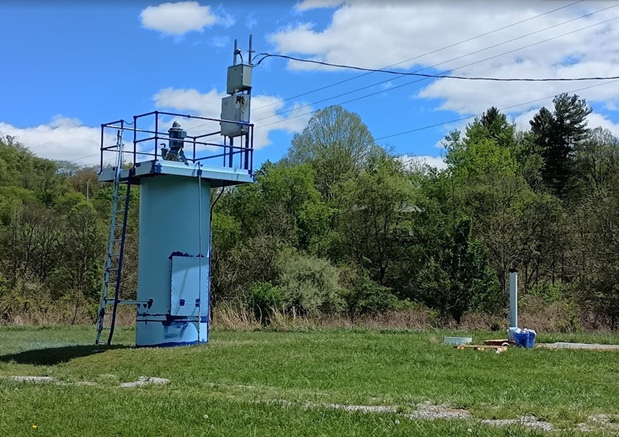
The Theis equation is based on several simplifying assumptions that allow for an analytical solution. It assumes that the aquifer is homogeneous, isotropic, and of infinite extent, meaning that its properties are uniform in all directions and that its boundaries do not influence the flow within the time frame considered. The aquifer is also assumed to be confined, with water released instantaneously from storage due to a decline in hydraulic head. Additionally, the pumping well is considered to fully penetrate the aquifer and to have negligible diameter, allowing it to be treated as a line sink. These assumptions, while idealized, make the equation mathematically tractable and useful for interpreting real-world pumping test data.
At the core of the Theis method is an equation that relates drawdown, which is the decline in water level, to time and distance from the pumping well. The equation incorporates the two key aquifer parameters of transmissivity and storage coefficient (also known as storativity). Transmissivity describes the ability of the aquifer to transmit water and is defined as the product of hydraulic conductivity and aquifer thickness. The storage coefficient represents the amount of water released from storage per unit surface area of the aquifer per unit decline in hydraulic head. By analyzing how drawdown changes over time at various distances from the pumping well, hydrogeologists can estimate these parameters and gain insight into the aquifer's characteristics.
The mathematical form of the Theis equation involves an exponential integral known as the well function, which depends on a dimensionless variable combining time, distance, transmissivity, and storage coefficient. Because this function cannot be expressed in a simple closed form, it is typically evaluated using tables, type curves, or numerical approximations. One common approach, still taught in fundamental graduate level hydrogeology courses, is the type curve matching method. Observed drawdown data from a pumping test are plotted and matched to a theoretical curve derived from the Theis solution. This graphical technique allows practitioners to estimate aquifer properties by identifying the best fit between observed and theoretical responses. Most practitioners now use computer programs to fit the Theis equation to data.
The application of the Theis equation extends beyond simple parameter estimation. It is also used to predict future drawdown under different pumping scenarios, assess the potential impacts of groundwater extraction on nearby wells and surface water bodies, and design well fields for optimal performance. Despite its assumptions, the Theis solution often provides a reasonable approximation of real aquifer behavior, particularly in confined systems where boundary effects are minimal during the early stages of pumping. For more complex conditions, such as unconfined aquifers or systems with significant heterogeneity, modifications of the Theis method or numerical models may be required.
One of the strengths of the Theis equation is its ability to represent the transient nature of groundwater flow. Unlike steady state models, which assume that conditions do not change over time, the Theis solution accounts for the gradual propagation of drawdown through the aquifer. This makes it particularly valuable for interpreting pumping tests, where water levels are monitored over time as pumping continues. The resulting data provide a dynamic picture of how the aquifer responds, enabling more accurate characterization and management decisions.
However, the limitations of the Theis method must also be recognized. The assumptions of homogeneity and infinite extent are rarely fully met in natural systems, where geological variability and boundaries such as faults, rivers, or impermeable layers can significantly influence flow patterns. Additionally, well losses and partial penetration can introduce deviations from the idealized conditions assumed in the model. As a result, hydrogeologists must use judgment when applying the Theis equation and often supplement it with other methods or field observations to ensure reliable results.
In conclusion, the Theis equation remains a foundational tool in groundwater hydrology for modeling pumping-induced drawdown in confined aquifers. Its analytical nature provides a clear and efficient means of estimating key aquifer parameters and understanding transient flow behavior. While its assumptions limit its applicability in some cases, it continues to serve as a valuable starting point for groundwater analysis and a benchmark against which more complex models can be compared. The enduring relevance of the Theis method reflects its balance of simplicity and practical utility in addressing the challenges of groundwater resource management.
Multiple Choice Quiz
1. What type of aquifer is primarily assumed in the Theis equation?
A. Unconfined aquifer
B. Leaky aquifer
C. Confined aquifer
D. Fractured aquifer
2. What does transmissivity represent in the Theis equation?
A. The volume of water stored in the aquifer
B. The ability of the aquifer to transmit water
C. The rate of rainfall infiltration
D. The porosity of the soil
3. What is storage coefficient in groundwater modeling?
A. The amount of water released from storage per unit decline in head
B. The speed of groundwater flow
C. The thickness of the aquifer
D. The distance between wells
4. What is a common fundamental graphical method taught in graduate university hydrogeology programs that applies the Theis equation to field data?
A. Numerical simulation modeling
B. Direct measurement of porosity
C. Satellite imaging analysis
D. Type curve matching
5. What is one limitation of the Theis equation?
A. It cannot model any groundwater system
B. It requires no field data
C. It assumes idealized aquifer conditions
D. It only applies to surface water
Type your answers in the box to help remember them, before hovering over the answers:
Answers
Reference: Theis, C.V. (1935). The relation between the lowering of the piezometric surface and the rate and duration of discharge of a well using groundwater storage. Transactions of the American Geophysical Union, v. 16, p. 519-524. https://doi.org/10.1029/TR016i002p00519 (requires fee to download)
For equations and calculators on Theis equation and transmissivity, visit our Theis equation calculator and transmissivity calculator pages.
Lesson and questions generated in part by chatGPT AI. The AI-generated portions were verified by Ken Edwards, Ph.D., P.E. of LMNO Engineering, Research, and Software, Ltd. Ken can be contacted at the email and phone number below.
© 2026 LMNO Engineering, Research, and Software, Ltd. All rights reserved.
LMNO Engineering, Research, and Software, Ltd.
7860 Angel Ridge Rd. Athens, Ohio 45701 USA Phone: (740) 707‑2614
LMNO@LMNOeng.com
https://www.LMNOeng.com